# series

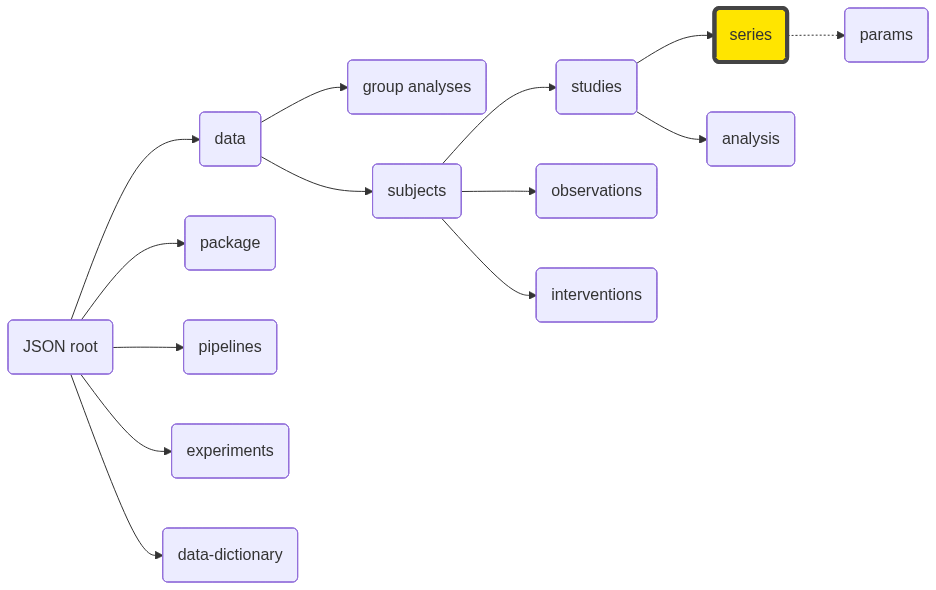
An array of series. Basic series information is stored in the main `squirrel.json` file. Extended information including series parameters such as DICOM tags are stored in a `params.json` file in the series directory.

<figure><img src="https://mermaid.ink/img/pako:eNqVlEFrgzAUx7-KZBQU6ijDXRz0tF3G2GC9DS-v5tlmVSNJ3Cql332JMWl1PbQezPsnv39e8h56IDmnSFKyEdBsg7fPrA70IzhX4evq472PojheUlAQmlf0dEL0fAP5DjYYDuN0lTVYshpl6KMJgfsGBauwVjI8iyeUSRxTlivGaxBdONGRhfvZeLkRvG2ghrKTOnGvAifdvgMq2_U35jq1C9y604ZRLWV6o2G8QPC1RPED5jAyPBcXWFYrvayv2MMj5WmbyKTW5TCZ--H_sr0Uk6ELPNIb4nvTHgGVLFhpOmRCh9j3bHZCTUkMKEdtns3OumKwk7TwSQf9ROR8vuP9OQZhPU5NHO4axuBia3BqZPBXUF2JgT--Ycr0riiKua6V4DuMKcgtCAFd-jA2jbLcYpxU4RbrqBTXGCd239FrvNZjm-x5fFws5taR3iVJMsTxL6NqmybNnsxJhaICRvWf4WB2yojaYoUZSXVIsYC2VBnJ6qNG20bXHl8oU1yQtIBS4pxAq_iqq3OSKtGig54Z6B9N5Sn9mX5x7vTxD8AkkTU?type=png" alt=""><figcaption></figcaption></figure>

### JSON variables

:blue\_circle: Primary key\
:red\_circle: Required\
:yellow\_circle: Computed (squirrel writer/reader should handle these variables)

<table data-full-width="true"><thead><tr><th width="238.99111900532864" align="right">Variable</th><th width="131">Type</th><th width="101">Default</th><th>Description</th></tr></thead><tbody><tr><td align="right"><code>BidsEntity</code></td><td>string</td><td></td><td><a href="https://bids.neuroimaging.io/">BIDS</a> entity (anat, fmri, dwi, etc)</td></tr><tr><td align="right"><code>BidsSuffix</code></td><td>string</td><td></td><td>BIDS suffix</td></tr><tr><td align="right"><code>BIDSTask</code></td><td>string</td><td></td><td>BIDS Task name</td></tr><tr><td align="right"><code>BIDSRun</code></td><td>number</td><td></td><td>BIDS run number</td></tr><tr><td align="right"><code>BIDSPhaseEncodingDirection</code></td><td>string</td><td></td><td>BIDS PE direction</td></tr><tr><td align="right"><code>Description</code></td><td>string</td><td></td><td>Description of the series</td></tr><tr><td align="right"><code>ExperimentName</code></td><td>string</td><td></td><td>Experiment name associated with this series. Experiments link to the <a href="/pages/tFr00SPU7TPRxDjNJQkb">experiments</a> section of the squirrel package</td></tr><tr><td align="right"><code>Protocol</code></td><td>string</td><td><span data-gb-custom-inline data-tag="emoji" data-code="1f534">🔴</span></td><td>Protocol name</td></tr><tr><td align="right"><code>Run</code></td><td>number</td><td></td><td>The run identifies order of acquisition in cases of multiple identical series.</td></tr><tr><td align="right"><code>SeriesDatetime</code></td><td>date</td><td><span data-gb-custom-inline data-tag="emoji" data-code="1f534">🔴</span></td><td>Date of the series, usually taken from the DICOM header</td></tr><tr><td align="right"><code>SeriesNumber</code></td><td>number</td><td><span data-gb-custom-inline data-tag="emoji" data-code="1f534">🔴</span> <span data-gb-custom-inline data-tag="emoji" data-code="1f535">🔵</span></td><td>Series number. May be sequential, correspond to NiDB assigned series number, or taken from DICOM header</td></tr><tr><td align="right"><code>SeriesUID</code></td><td>string</td><td></td><td>From the SeriesUID DICOM tag</td></tr><tr><td align="right"><code>BehavioralFileCount</code></td><td>number</td><td><span data-gb-custom-inline data-tag="emoji" data-code="1f7e1">🟡</span></td><td>Total number of beh files (including files in subdirs)</td></tr><tr><td align="right"><code>BehavioralSize</code></td><td>number</td><td><span data-gb-custom-inline data-tag="emoji" data-code="1f7e1">🟡</span></td><td>Size of beh data, in bytes</td></tr><tr><td align="right"><code>FileCount</code></td><td>number</td><td><span data-gb-custom-inline data-tag="emoji" data-code="1f7e1">🟡</span></td><td>Total number of files (including files in subdirs)</td></tr><tr><td align="right"><code>Size</code></td><td>number</td><td><span data-gb-custom-inline data-tag="emoji" data-code="1f7e1">🟡</span></td><td>Size of the data, in bytes</td></tr><tr><td align="right"><a href="/pages/HhKUoHpxbMFKhRj5zwja">params</a></td><td>JSON file</td><td></td><td><code>data/subjectID/studyNum/seriesNum/params.json</code></td></tr><tr><td align="right"><a href="/pages/VGfS15svb9utnYGxPI7g">analysis</a></td><td>JSON object</td><td></td><td> </td></tr></tbody></table>

### Directory structure

Files associated with this section are stored in the following directory. `subjectID`, `studyNum`, `seriesNum` are the actual subject ID, study number, and series number. For example `/data/S1234ABC/1/1`.

> `/data/<SubjectID>/<StudyNum>/<SeriesNum>`

Behavioral data is stored in

> `/data/<SubjectID>/<StudyNum>/<SeriesNum>/beh`


---

# Agent Instructions: Querying This Documentation

If you need additional information that is not directly available in this page, you can query the documentation dynamically by asking a question.

Perform an HTTP GET request on the current page URL with the `ask` query parameter:

```
GET https://docs.neuroinfodb.org/nidb/contribute/squirrel-data-sharing-format/specification-v1.0/data/subjects/studies/series.md?ask=<question>
```

The question should be specific, self-contained, and written in natural language.
The response will contain a direct answer to the question and relevant excerpts and sources from the documentation.

Use this mechanism when the answer is not explicitly present in the current page, you need clarification or additional context, or you want to retrieve related documentation sections.